Research Repository · Presentations
Slides & Talks
Slide decks and talks by Kamaruzzaman Bustamam Ahmad from conferences, lectures and organisational forums, free to download for study and teaching with proper attribution.
Slide decks
Presentations collection

Synergising the strategic plan, work programme and cadre development of PWNU Aceh 2026–2031, arguing that Aceh’s challenge is not a lack of Islam but a lack of governance for the common good (maslahat).
How to understand scientific paradigms in Indonesian Islamic higher education: where knowledge begins, the evolution of Islamic studies in Indonesia, and a comparison of the islamisation, integration, interconnection and fricativisation paradigms.
A graduation oration on the direction, purpose and readiness of INU Aceh alumni for the age of AI and planetary civilisation: four fields of service and a trajectory of consciousness from 2010 to 2100.

New trends in religious understanding in a planetary civilisation: Kaku and Kurzweil’s turning point, scientific subordination, algorithmic rationality and epistemic colonialism, and the move from reactive to predictive Islamic knowledge.

Four paradigms that reshaped Islamic higher education: epistemic dependency, islamisation, integration and interconnection, the epistemological crisis they left unresolved, and fricativisation as a fourth paradigm moving from theory to practice.
The strategic plan of UIN Ar-Raniry Banda Aceh: vision and mission, targets and indicators, transformation strategies from internationalisation to digital governance, accreditation, partnerships, academic culture and funding.
A complete 16-chapter course in linguistic anthropology by Fitri Zulfidar: language as cultural resource and practice, relativity, speech events, politeness, indexicality and ideology, identity, language in Aceh and the Malay world, digital media and field methods.
All carousel and premium-slide versions prepared for PKDP 2026 in one deck: the evolution of knowledge sources from intuition to AI, the evolution of Islamic studies in Indonesia, four paradigms of knowledge in several table and visual versions, a map of the philosophy of science, the Risalah of the fricativisation paradigm, and conclusions. All 28 slides are combined into a single PPTX and PDF.

An introductory map for the course Kajian Sains Islam: how revelation, reason, experience, values, culture and structure combine in the birth of Islamic knowledge, from classical sources to text mining and AI.

A retrospective on the scientific paradigms of state Islamic universities: from normative-theological approaches to the social sciences and humanities, with a comparative table of four paradigms of knowledge.
How to choose a research approach: levels of research from descriptive to theoretical findings, mastering one discipline in depth, and the reasoning that links a study model to its approach.
Integrating local wisdom and regional specificity, including Aceh’s special autonomy, into election oversight: political participation, electoral legitimacy and the cultural values that sustain social harmony.
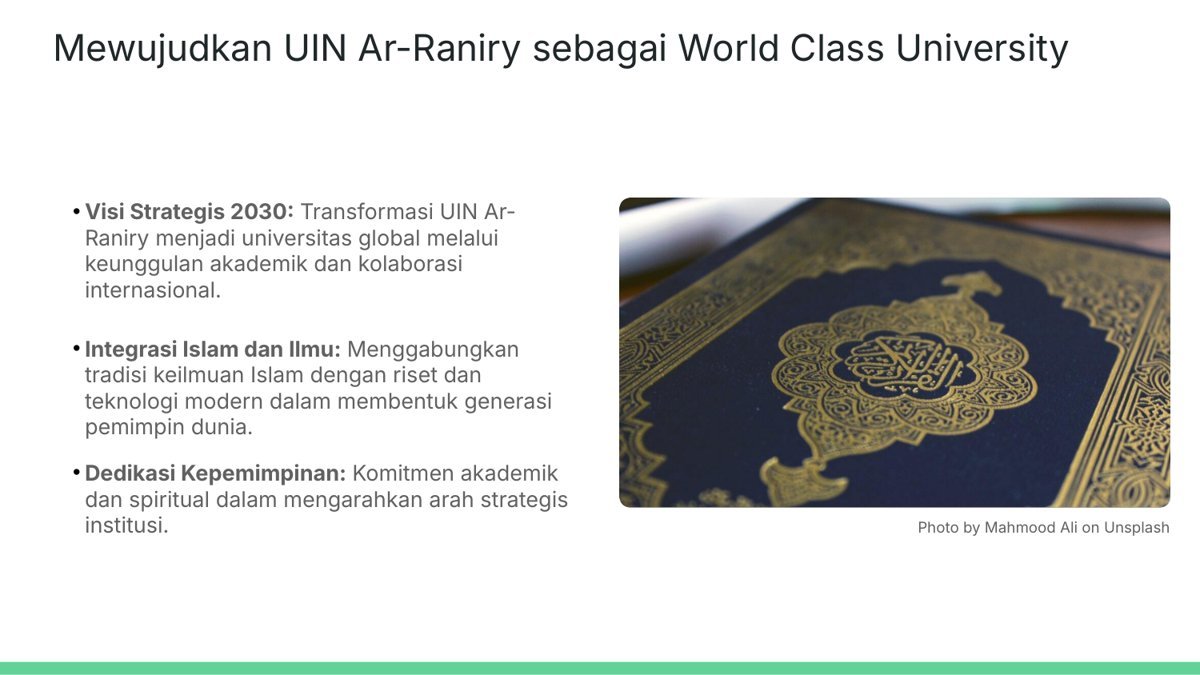
A strategic vision for transforming UIN Ar-Raniry into a world-class university: integrating Islam and science, a roadmap toward the QS Top 500, academic excellence and international collaboration.
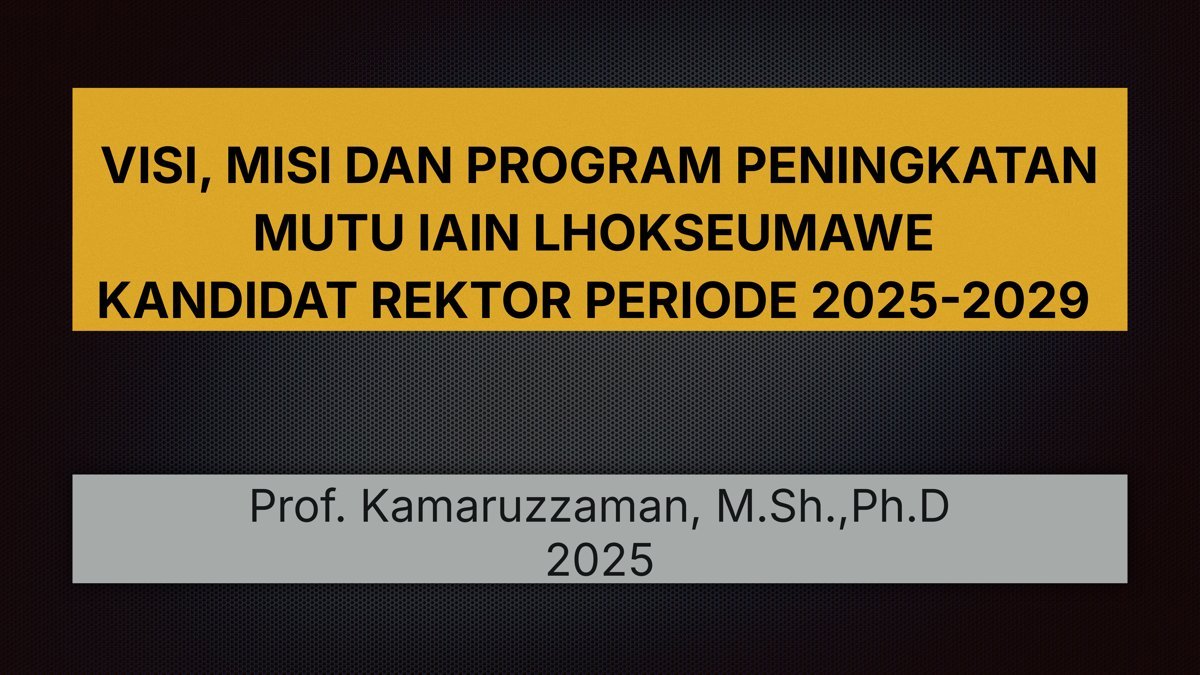
Vision, mission and quality-improvement programme presented as a rector candidate for IAIN Lhokseumawe for 2025–2029, including the accreditation map of study programmes.
Integrating the legacy of Syeikh Hamzah Fansuri into the geopolitics of Subulussalam: region, culture and environment, Subulussalam as a cultural gateway of Aceh, and a strategy for an ethical, knowledge-based society.
Lecture slides on variables and hypotheses: independent, dependent, moderator and control variables, and how hypotheses are formulated in quantitative research.
Masterclass slides on signal intelligence: definitions, types such as COMINT and ELINT, and the role of SIGINT in modern intelligence operations.

How social problems shift from the physical to the online world, the issues that unsettle communities, dependence on government funds, and strategies for community early warning in Aceh.

The fricativisation paradigm for Islamic higher education: its ontology, epistemology and axiology, an OBE curriculum joined with a curriculum of love, cross-faculty implementation and transformational assessment.
Comparing islamisation, integration, interconnection and fricativisation; the meaning of “fricative”; the Allah–nature–human relation, and the aims of a living, spiritual epistemology.
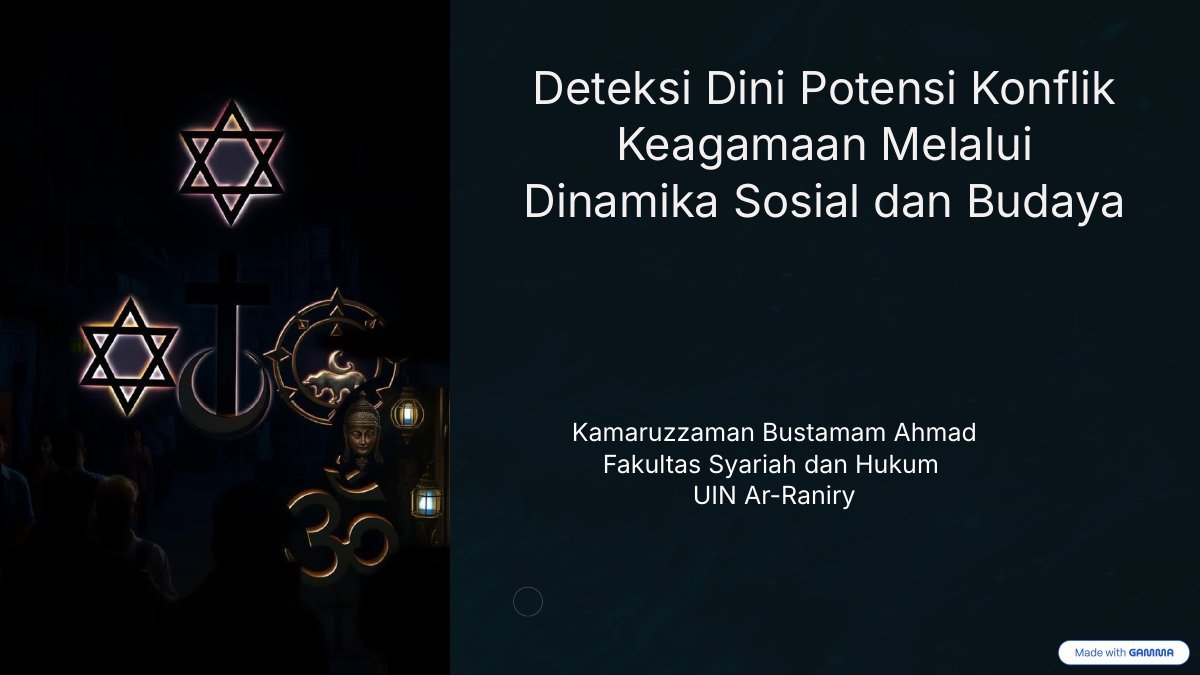
Religious conflict as a mirror of social and cultural change: religion as commodity, digital information shifts, religious consciousness online, the future of religious life in Aceh and strategies for early detection.
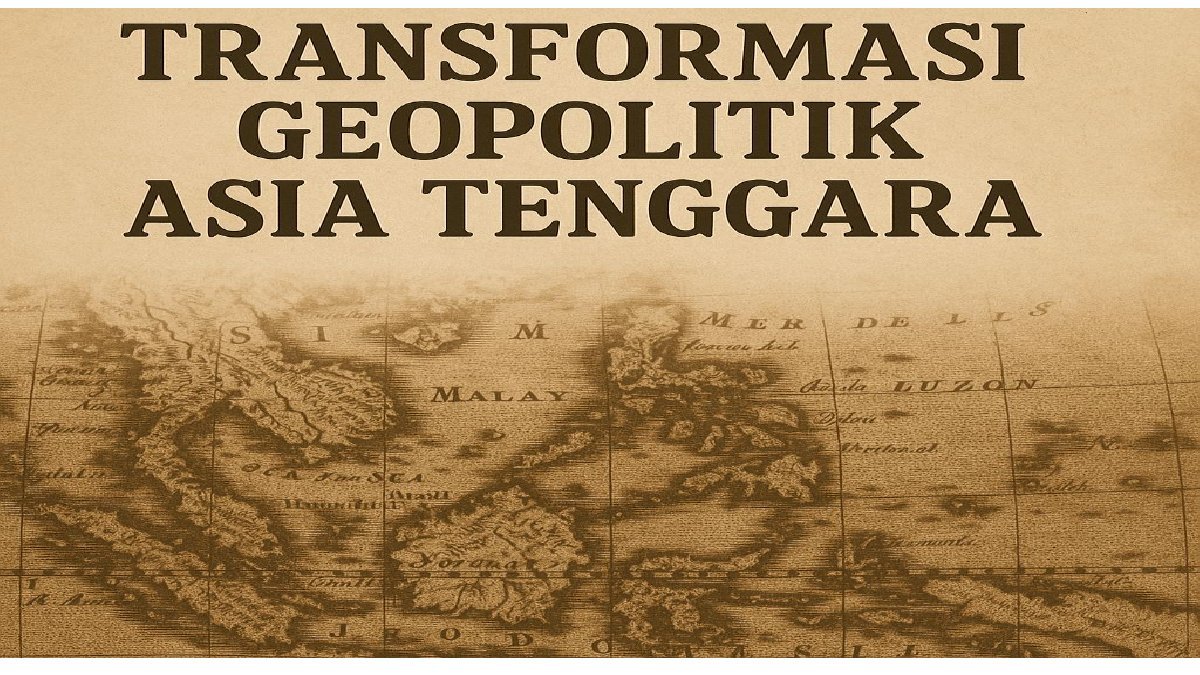
Southeast Asia from colonial periphery to strategic focus: the evolving role of ASEAN, US–China rivalry in the Indo-Pacific, and a case study of ASEAN+3 and RCEP.
Geopolitics as the relation between geographic space and power: its physical, political and global factors, and why it matters for foreign policy, economics and diplomacy.
Intelligence from scientific measurement and signatures: radar, nuclear, acoustic and chemical-biological MASINT, collection methods, strengths and limits, and practical cases.
Religion as a socio-cultural phenomenon: rituals, symbols, institutions and communities, and how Islam converses with local cultures in Aceh, Java, Bugis and Bali.
Ethnographic approaches to religion: participant observation, in-depth interviews, document study, field notes, the researcher as engaged observer, and research ethics.

A full semester of slides on Aceh studies: local wisdom and adat, sharia and qanun, ulama networks, Aceh in Nusantara civilisation, post-conflict reconstruction, identity and modern cultural expression. Each meeting opens in Arsip & Pustaka with PDF and PPTX.

Thuggery as a symptom of a broken system: its structure from street to power, the double reality of mass organisations, Aceh between investment and instability, and a socio-cultural approach to the problem.
FKDM Aceh assessment of multidimensional vulnerabilities in 2025, district-by-district mapping, risk projections for 2026 and early-warning strategies (full 62-slide version).
A 16-slide summary of the FKDM Aceh vulnerability assessment for 2026, now including notes from the audience Q&A on Gen Z, self-recruitment, Simeulue and Aceh Tamiang cases, and village-level security actors.

Radicalism and terrorism as a national problem: key terms, homegrown terrorism, new drivers, social and cultural trends, preparedness, and a model for prevention.

Character and Islamic ethics education in West Aceh: hyper-mind society, digital pathologies, proactive Islamic social engineering and concrete policy recommendations.
A concise version of the fricativisation paradigm: knowledge as light and breath, faqaha–arafa–dabara–fakara, the human as microcosm, OBE and the curriculum of love, and evaluation and community service models.
How the shift from non-internet to internet knowledge, and the automation of religious knowledge production, reshapes the meaning and practice of religious moderation.
A social-anthropological reading of Acehnese society: its intellectual, technocratic, business, political and religious groups, the spaces they occupy, community resilience, and the outlook toward a Blueprint Aceh 2045.
An initial proposal for a scientific paradigm for UIN Ar-Raniry: how an Islamic university can develop a distinctive, integrated framework for knowledge.
Islamic law as a dynamic legal system facing global challenges: its relevance amid globalisation, and debates on fintech, bioethics, gender justice and conflict resolution.
New patterns of radicalism: the shift from non-internet to internet knowledge, the automation of religious knowledge production, and strategies to respond.
Strategies for young people in Aceh to move from reading to writing: how to read and write books, present, understand theory, learn from great figures, and treat knowledge production as an intellectual duty.

Choices after graduation, from civil service and contract work to entrepreneurship, and how to define success through income, recognition and reputation.
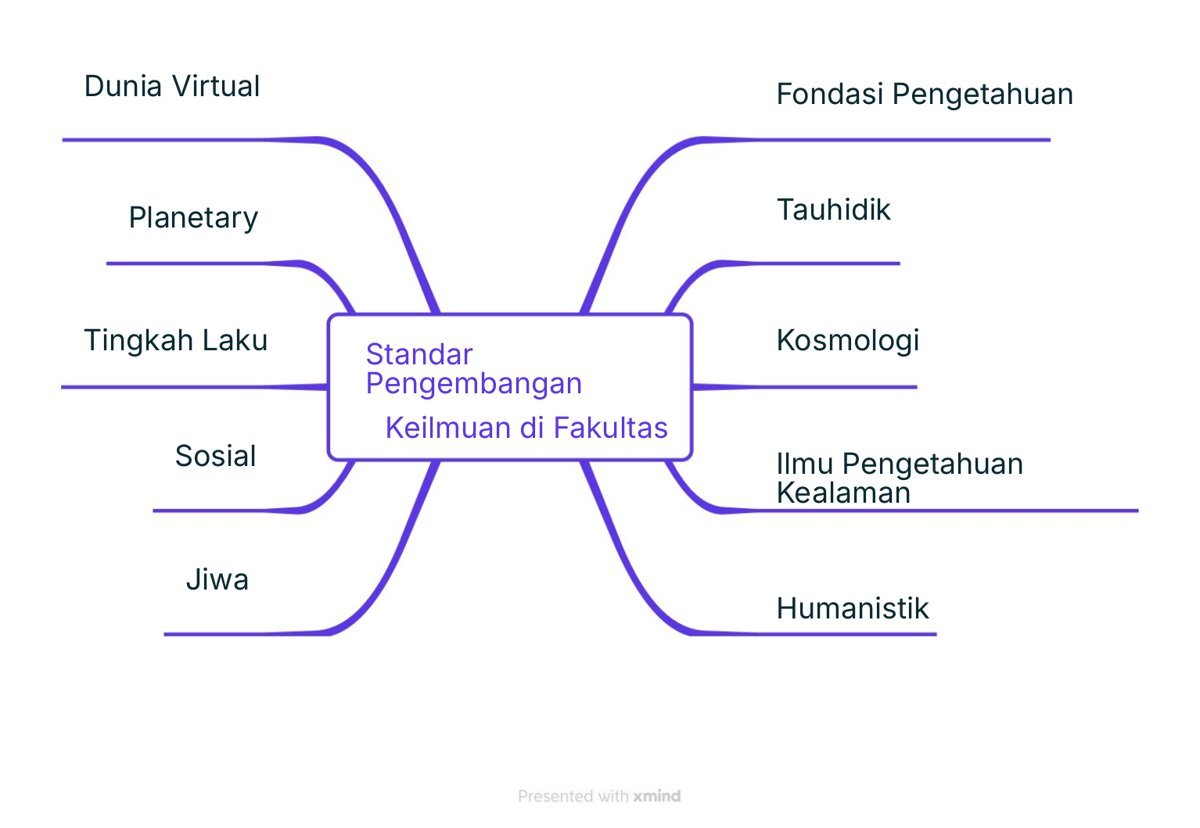
A mind map of standards for faculty knowledge development: tauhid-based foundations, cosmology, natural sciences and humanities, alongside the virtual, planetary, behavioural, social and spiritual dimensions.
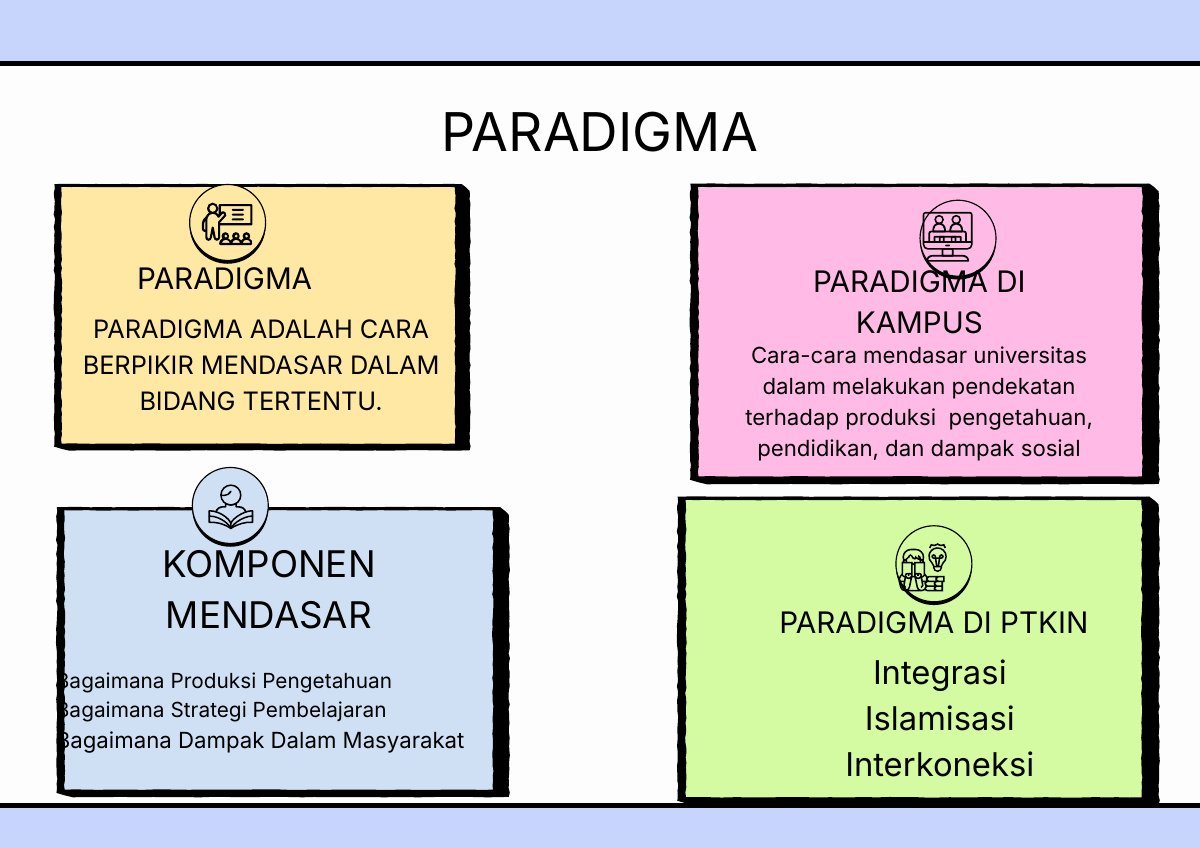
A knowledge strategy without dichotomy for UIN Ar-Raniry: the qara’a transformation map (fakara, faqaha, ‘arafa, dabara) toward certainty, and the structure of university core courses.
Discussion material on mapping the disciplines of sharia and law faculties: two options for the knowledge cluster, and the trees, branches and twigs of sharia law, comparative madhhab, Islamic economic, family, criminal and constitutional law, and astronomy (falak).

The Pase community of North Aceh through social anthropology: its groups, resilience and future.
A grand design and roadmap for implementing Islamic sharia in Aceh in four stages from 2025 to 2045.
Reflections from ethno-touring across Indonesia: after six volumes of Acehnologi, can Nusantara build its own knowledge base and discipline from the artefacts of local wisdom?

New trends in Indonesian radicalism: internet-based religious knowledge, homegrown terrorism, global mind and the digital state, techno-religion and dataism, and why prevention needs multi-layered strategies.
Radicalisation risks in the digital era and their prevention: online knowledge, conflicts of thought, homegrown terrorism, future forms of society and techno-religion.
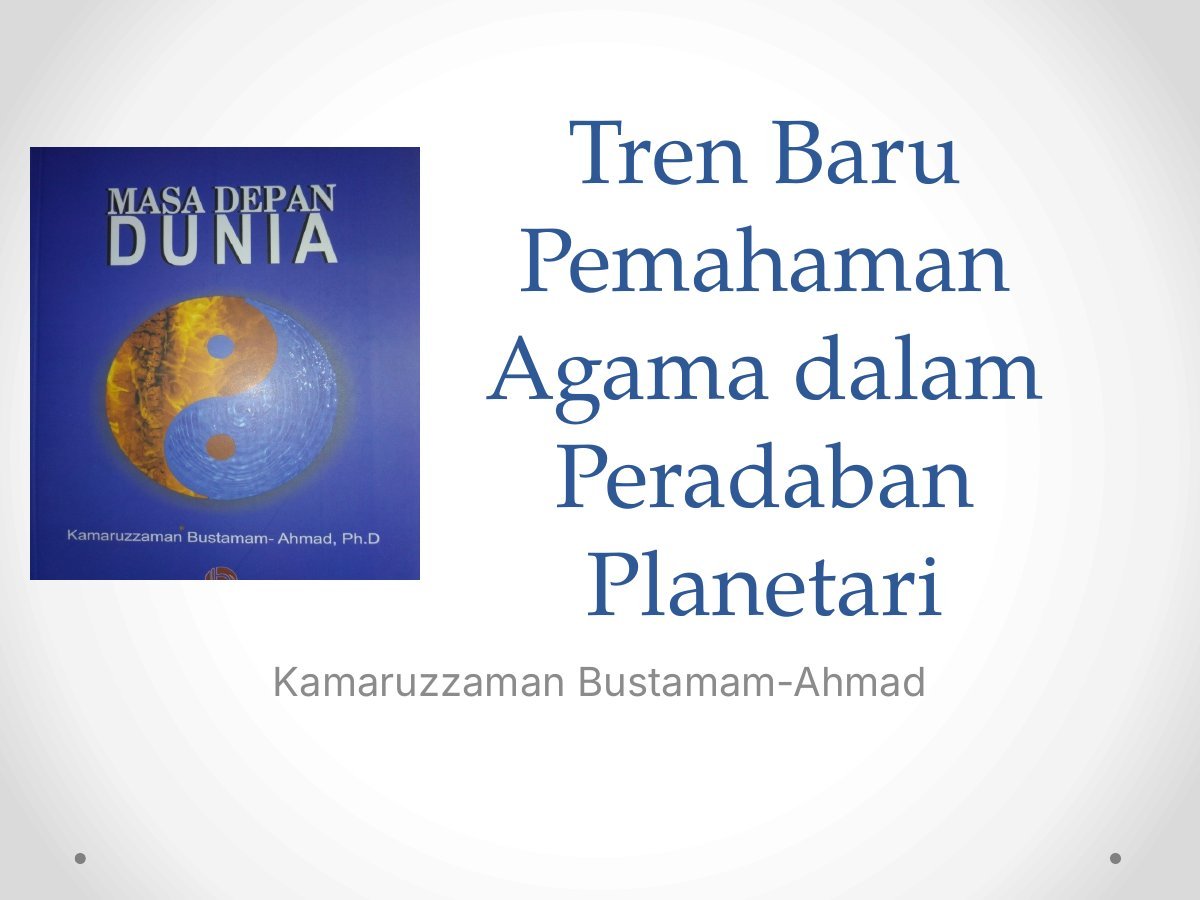
Religious understanding in a hyper-connected society: internet-based religious knowledge, popular reproduction of religious knowledge, and the rise of techno-religion, dataism and technology-driven radicalism among millennials.

Religious issues after Indonesia’s 2019 election: from the New Order to Reformasi, roots of values and Islamic cosmologies, internet-based religious knowledge, Geertz’s abangan–santri–priyayi revisited in electoral alignments, and psy-war on social media.
Preventing radicalism through religious understanding and local culture: internet-based knowledge, homegrown terrorism, and the spiritual, ethical, artistic, moral and social foundations of Acehnese culture.
Key ideas for reading social reality: advanced societies and their others, cultural change, how thinking is influenced, symptoms of the digital age, national imagination, traditions of statehood and social engineering.
A research proposal on cosmology as national defence, with Sundanese, Javanese and Balinese case studies and an ethnographic method.

The Aceh version of the key-ideas talk, mapping information sources and Aceh’s present conditions in education, custom and culture, law, politics and economy to read the forces of change.
How to write a scholarly article: choosing and limiting a theme, presentation models, abstracts, opening sentences, building informative, analytical and argumentative paragraphs, and punctuation with connectives.
Terrorism within global rivalry: a polycentric world hierarchy, US–China competition, phases of social change, clashes of values in Indonesia, virtual radicalism, future scenarios, and a multi-layered fricative strategy with ideological forensics.

Community empowerment against radicalism: foundations of social resilience, cultural construction and change, levels of consciousness, multi-layered strategies, scenarios for Indonesia and phases of social change.

What a theory is (Abend, Sibeon, Taylor), the problem of theorising, four pitfalls in applying meta-theory, Ritzer’s three models, a local-knowledge study in Aceh, and the stages of analysing and interpreting ethnographic data.

Religious intolerance in Indonesia: socio-political mapping, mob violence, many groups and voices, virtual intolerance and the 2015 Singkil case.
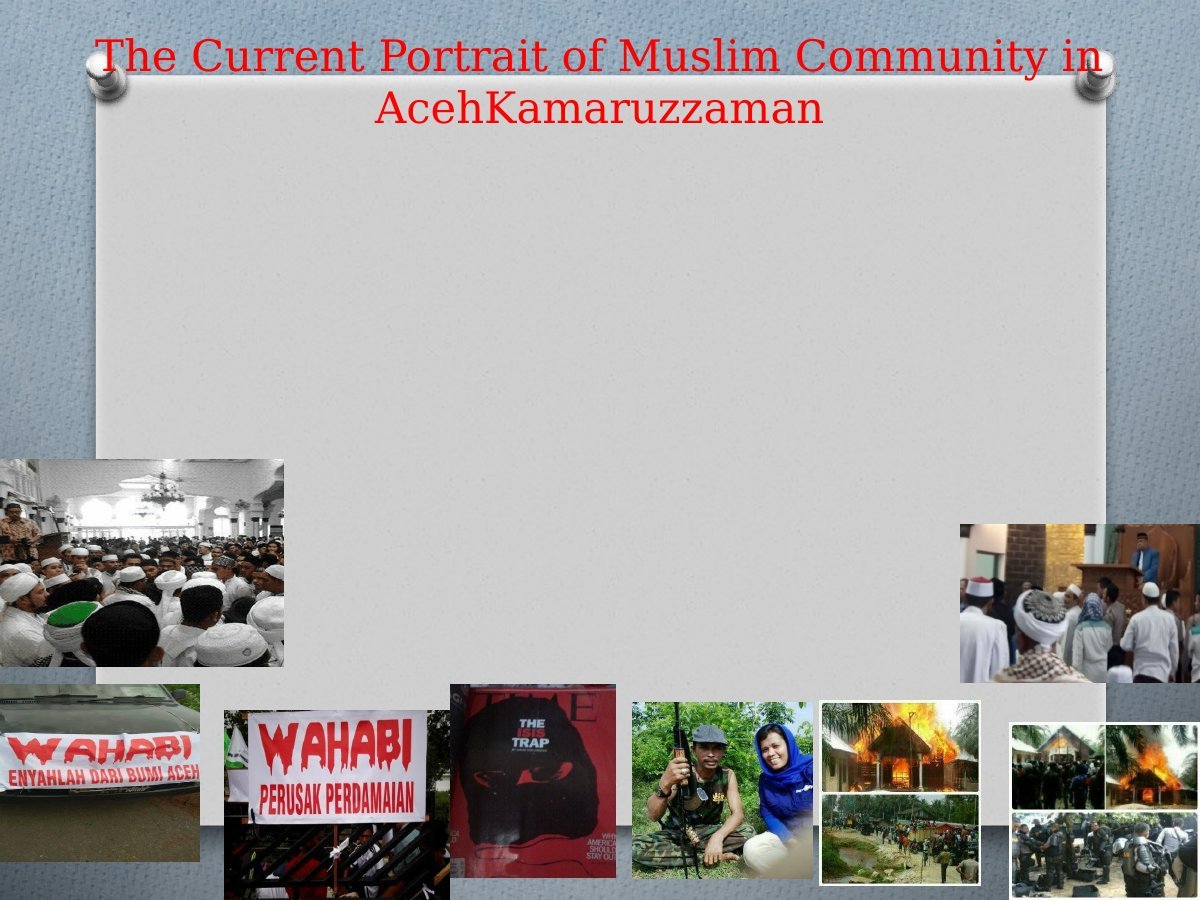
Mapping religious life in Aceh in 2016: Wahabism, land disputes, Din Minimi, the Singkil case, deviant sects and responses.
Five preparations for postgraduate researchers, seven models of research proposals from theory-proposing to predictive, and mapping research objects: figures, texts and events.
Trends in Islamic legal studies, three integration paradigms, the anthropological legacy from Snouck Hurgronje to Van Vollenhoven, Geertz’s thick description, and Acehnese cases on identity and ritual toward interpretive, theory-building research.

Focus-group material on detecting the spread of right- and left-wing ideologies in Aceh: social symptoms, land disputes as triggers, cases, and the barbaric-state scenario.
Writing for scholarly journals: levels of research, turning theses into articles, article types, IMRAD structure, titles, abstracts, introductions, methods, results, discussion, conclusions and referencing.

How shifting values, ethics and culture shape family conflict: changing meanings and symbols, rising divorce, strategies, and Acehnese concepts of na, hana, udep and droe.
Findings of a research team led by the author with Prof. Yusny Saby, Prof. M. Hasbi Amiruddin and FKPT Aceh: mapping radicalisation risks in Aceh, from land disputes and the Din Minimi group to the 2015 Singkil case and deviant sects, with early-warning recommendations.

A socio-bibliographic reading of religious dynamics: global terrorism phases, intelligence wars, competing pyramids of interest, future scenarios and Aceh’s socio-religious issues including the 2015 Singkil case.

Acehnese religiosity read through the way a people thinks: turi, haba peuingat, the philosophy of balance, peutimang nanggroe, self-knowledge and gratitude in social life.
Team research on the potential of zakat mal in Aceh, edited by the author: legal basis, method in six districts, estimates and recommendations.
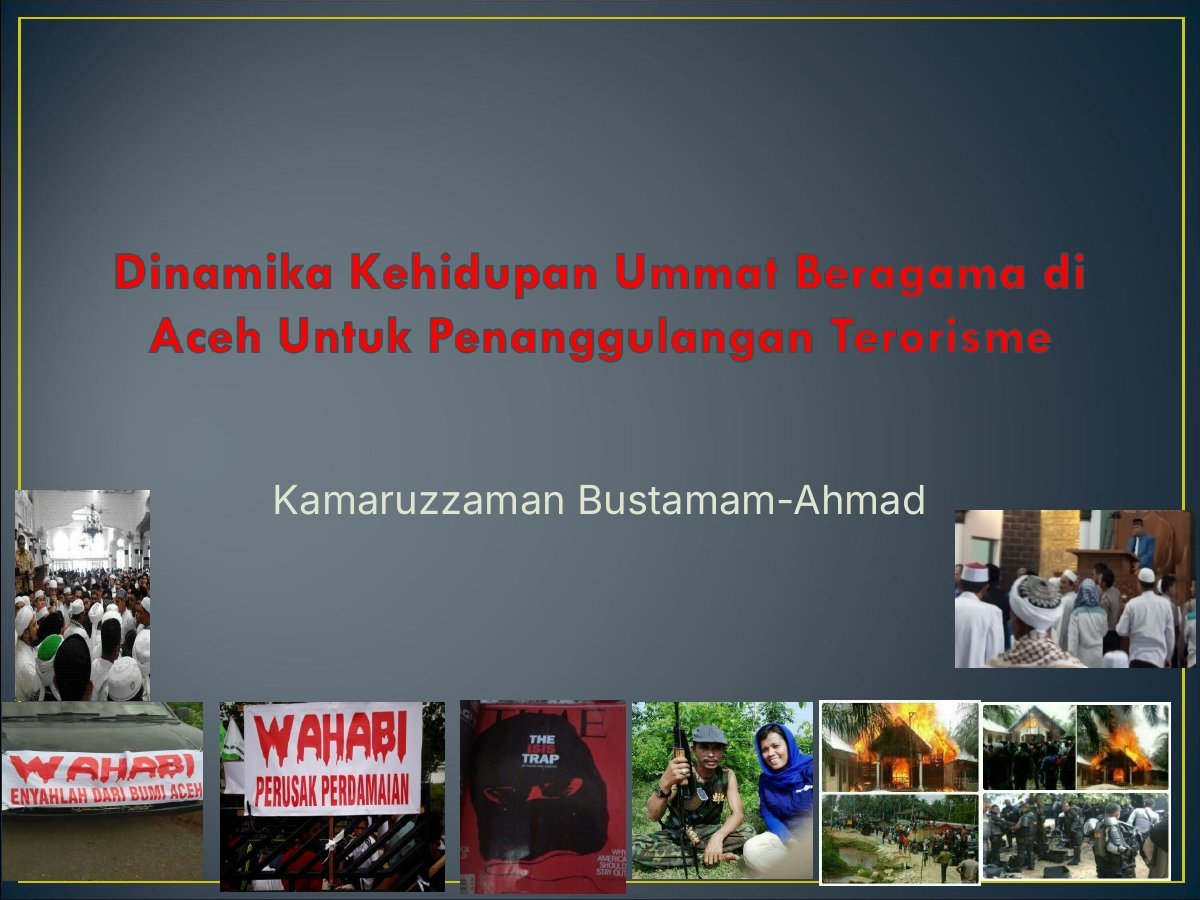
Aceh’s socio-political and religious dynamics at the end of 2015, from elite conflict and the 2017 elections to deviant sects, local wisdom and the shift from teungku to ustaz.
The reviewer version of the team study on radicalisation risks in Aceh, including quantified findings: international factors, deradicalisation that backfires, public awareness and the role of local politics.

The final December 2015 presentation, adding resource and community mapping, the shift from teungku to ustaz, deviant sects, survey results, an Acehnese proverb on social ills, and conclusions with recommendations.

With Prof. Rusjdi Ali Muhammad, for the Aceh Islamic Sharia Office: the constitutional basis of Aceh’s special status, the qanun framework, historical precedents from the sultanahs to Abdurrauf as-Singkili, and Acehnese cultural concepts that ground sharia.
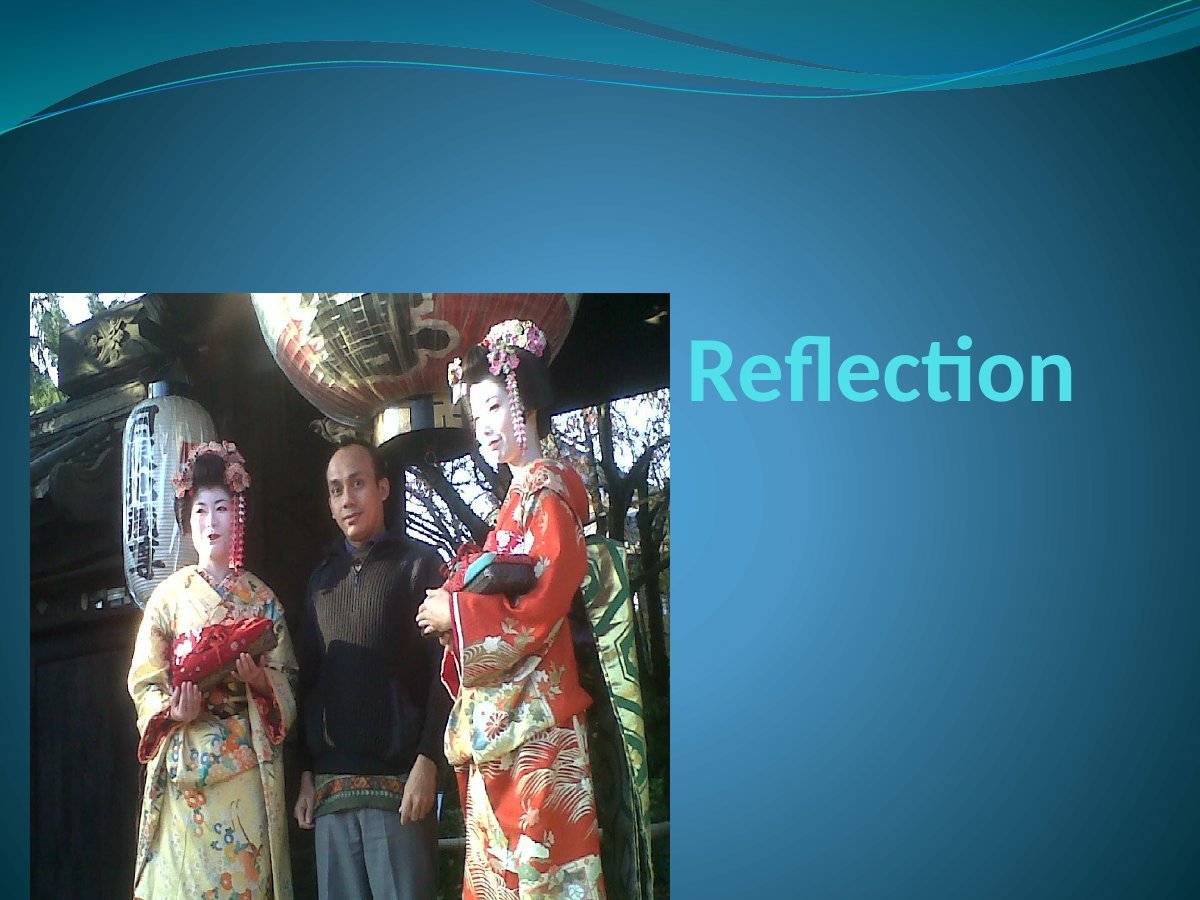
Reflections from a Japan–Southeast Asia exchange for young Muslim intellectuals: religion as culture, ritual and spirit of society, and how Japan’s privatised, culturalised religion contrasts with Indonesia and Malaysia.

Acehnese youth amid upheaval: identity and self-determination, the core Acehnese cultural concepts of lon, na and timang, planetary civilisation, future trends, and an agenda built on civilisational spirit, local knowledge and resilience.
Aceh’s historical ties with Riau and the Malay world: memories of Iskandar Muda’s expansion, Pasai and the Islamisation of Malacca, the Malay–Portuguese alliance, ar-Raniry, and links with Perak and Penang, with field photographs.
Talk at Universitas Muhammadiyah Semarang, 4 May 2013, on sharia in Aceh as a living tradition, presented mainly through field photographs.

An update on Aceh’s peace process for a Pattani audience: why peace was needed, experience of the process, cultural change, the Helsinki MoU, and remaining challenges.
From sociology to a phenomenology of religious experience in studying Islamic radicalism in Southeast Asia, with a pyramid of eight levels of consciousness.
Aceh, its government and its dayah in transition: how dayah joined the Acehnese concepts of udep and droe with daily life so that Islamic law worked without qanun, and why government and dayah must work together.
A sociological reading of corruption and power in Aceh: elites, the weakening of religion as a restraint, Aceh’s civil-society history, the Javanese court paradigm and the New Order, extractive institutions, and three paths to change.
Rethinking the role of mass organisations and NGOs in development: civil society alongside the state, cultural change and public space, New Order versus Reformasi, and organisational self-reliance.
A call for dayah to choose their path amid change: the historical role of ulama, future spiritual trends, knowledge as power, and the strategic role of dayah in Aceh’s future.

A portrait of Islamic education in Aceh through its hierarchy of religious teachers, from Abu Chik and Teungku Meunasah to the new ustaz, and what the shift means for religious authority.

Can the social sciences understand religious experience? Wach and phenomenological approaches, a pyramid of eight levels of human consciousness, and how anthropology and Islamic thought can study the experience of the sacred.
Please cite as: Ahmad, Kamaruzzaman Bustamam. (Year). Title [Slide presentation]. KBA13 Academy Research Repository. Decks are shared for educational, non-commercial use.
KBA13 network
Connected collections
Research, collaborate and discover
Explore published knowledge, propose a collaboration, or discuss a clearly scoped research question with KBA13 Academy.